FROM OBSERVATION TO UNDERSTANDING
A better image starts
with a better question.
What is IFOV?
IFOV means Instantaneous Field of View. It describes the angular area represented by an individual detector element. As distance increases, the area represented by each detector element becomes larger.
Can I measure the temperature of a target that is only one pixel wide?
Seeing a target and measuring it reliably are not the same thing. Quantitative work generally requires multiple detector pixels on the target so surrounding temperatures do not dominate the measurement.
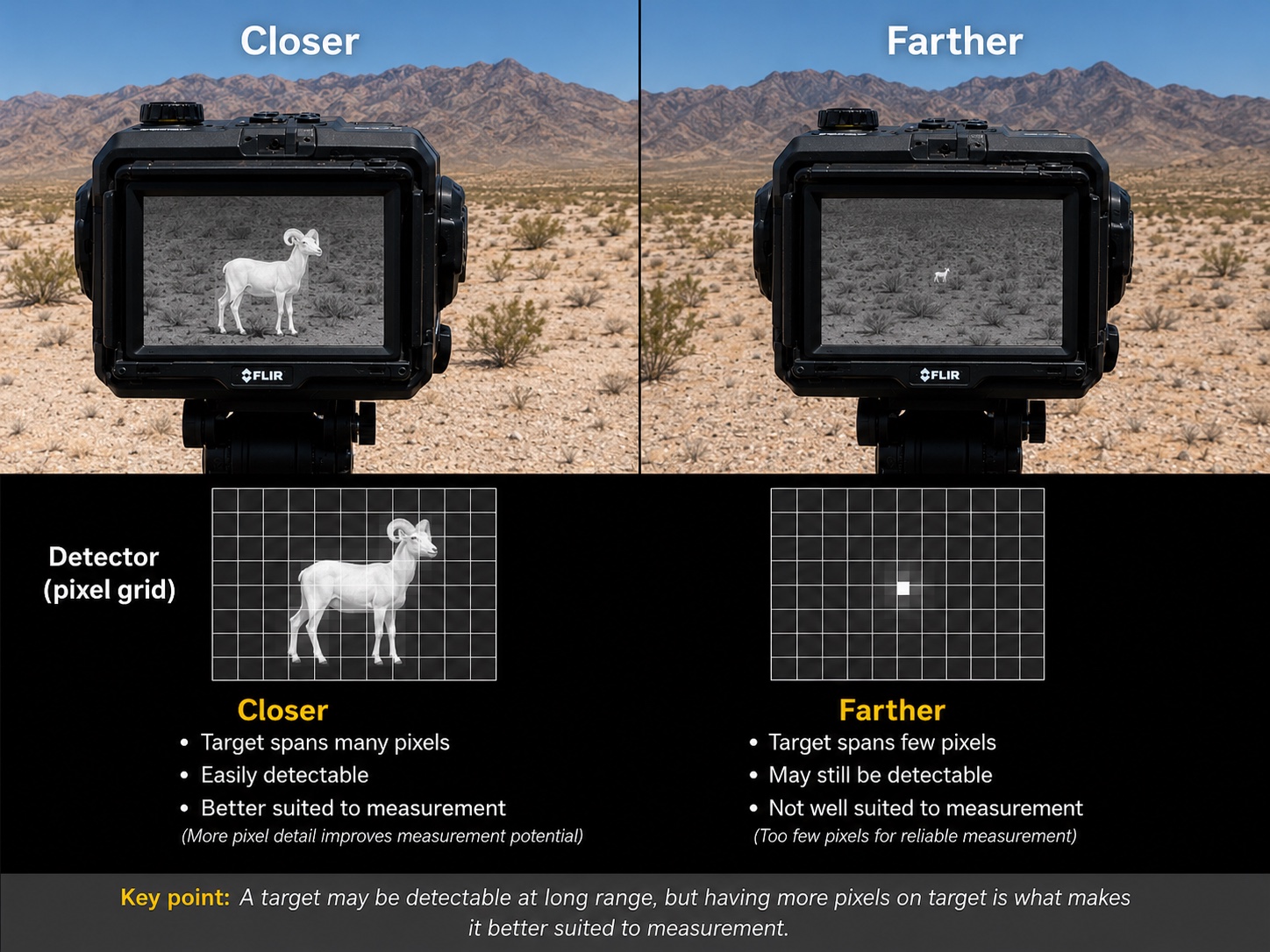
What is spatial resolution?
Spatial resolution describes the camera’s ability to distinguish small thermal details. Detector count, optics, distance and target size all contribute.
Does drone altitude affect thermal measurements?
Yes. Increasing altitude increases the ground area represented by each detector element. A flight altitude suitable for finding a large anomaly may be unsuitable for measuring a small component.
What is measurement IFOV?
Manufacturers and practitioners may distinguish between detecting an object and placing enough pixels on it for a defensible temperature measurement. That distinction should be understood before relying on a number displayed by the camera.
THE FIELD REFERENCE

TAKE THE NEXT QUESTION FURTHER
The Environment
Decides.
The Discipline of Defensible Thermography
Connect camera specifications to the decisions you make in the field.
Environmental history. Measurement physics. Competing explanations. The book explores the discipline behind acquiring, interpreting and defending thermal evidence.
- Before the missionPlan the question and the conditions.
- In the fieldReconsider when the scene changes.
- At the deskExamine what your evidence supports.