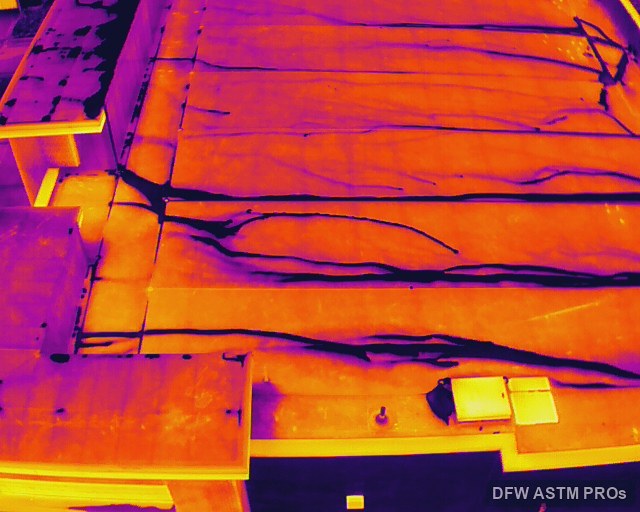
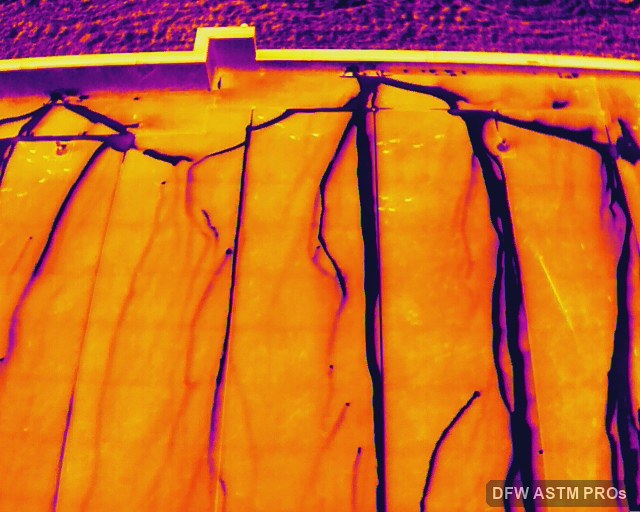
The building had not opened. Its 60-mil TPO roof was only months old. During a supplemental inspection following substantial rainfall, an aerial thermal examination recorded a network of dark, branching lines across the membrane.
They looked like veins. Several appeared to travel through the roof field toward the parapet and scuppers. On a new roof, that is enough to make an experienced examiner stop and ask what the image is actually showing.
The easy answer would be “moisture.”
The responsible answer is that several physical explanations must first be separated.
The visible roof changes the question
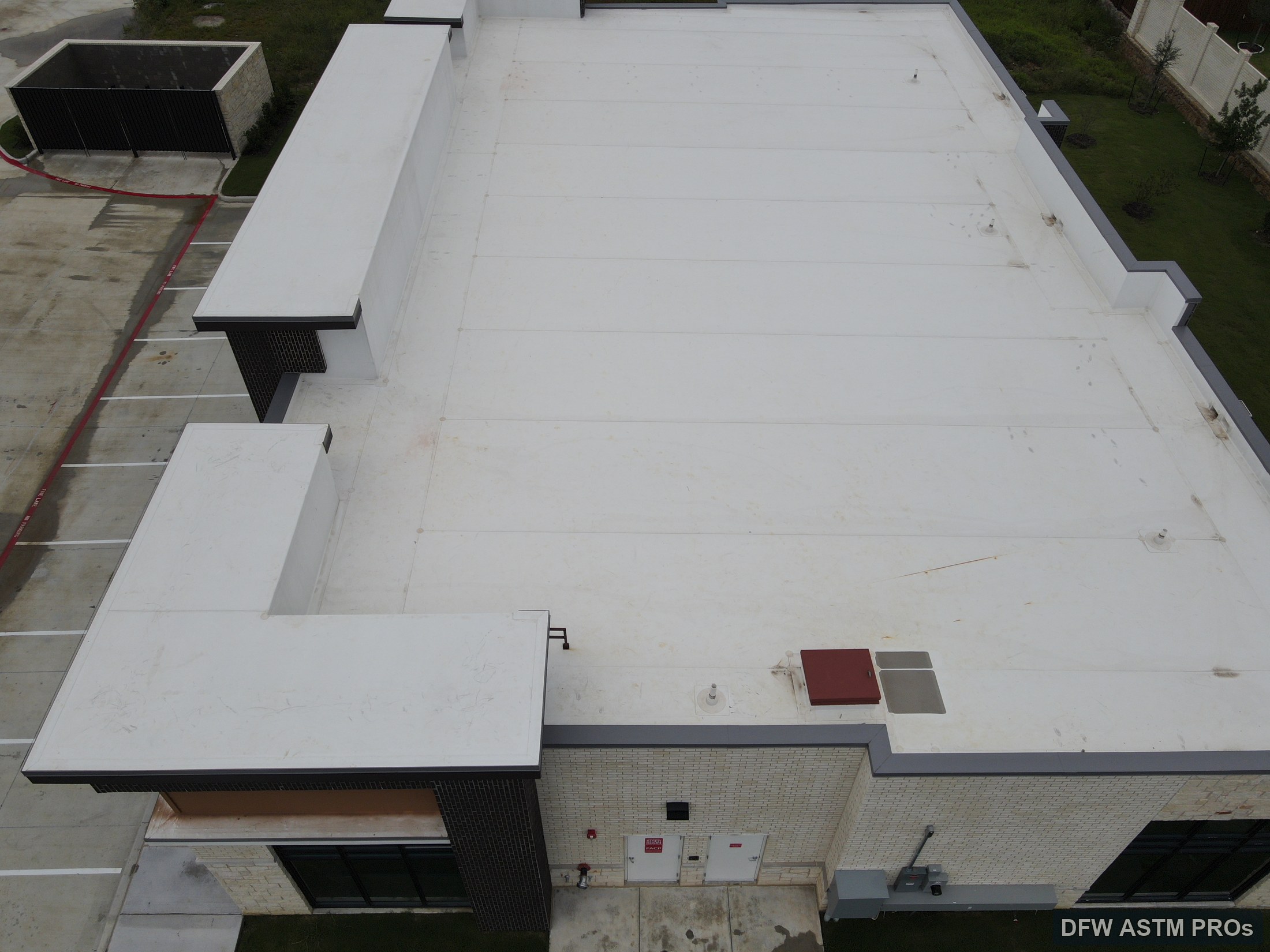
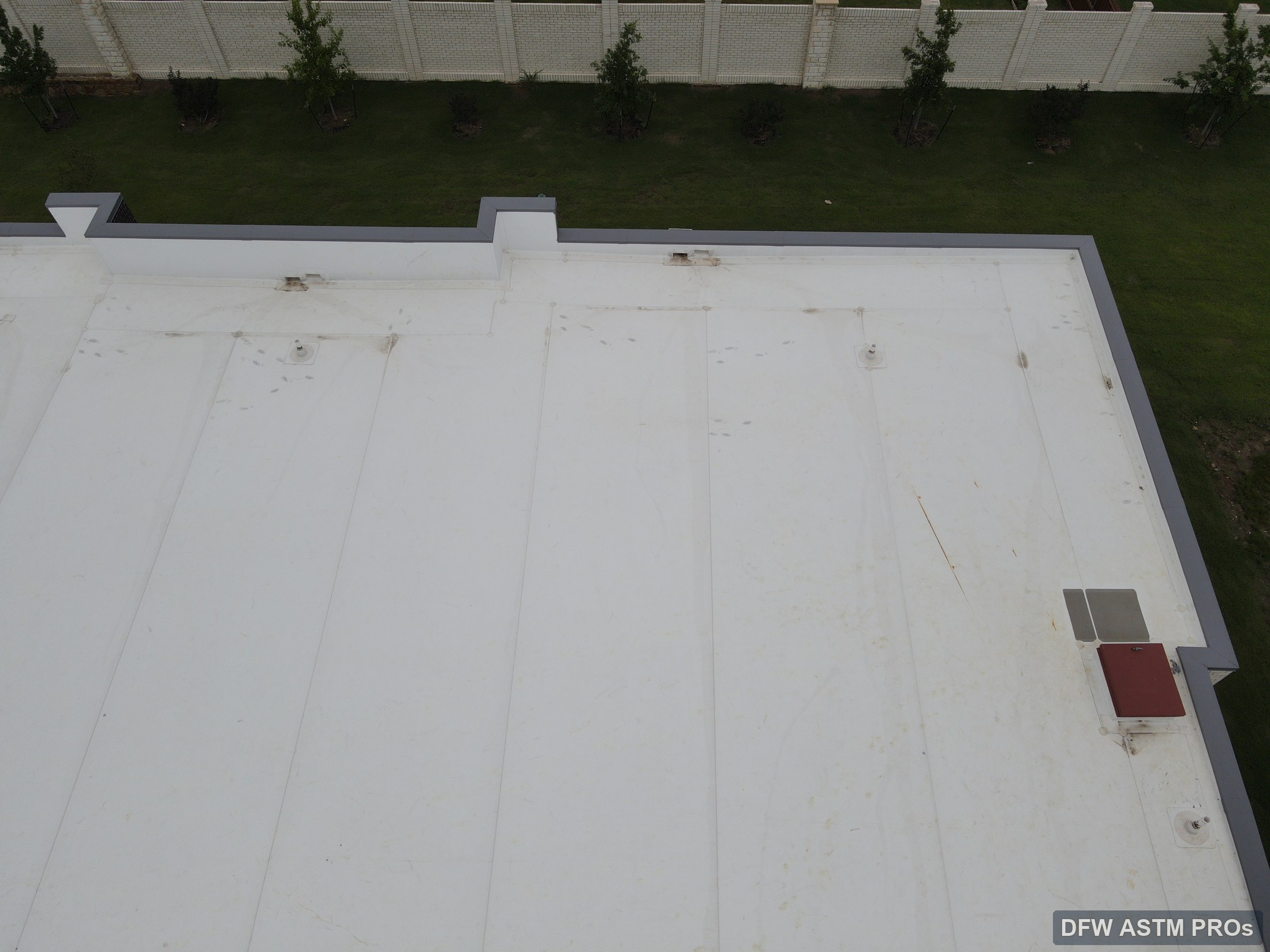
In visible light, the membrane does not display the severe wrinkling suggested by the first thermogram. The roof field appears comparatively smooth. Scuppers are present along the parapet, and staining can be seen near portions of the drainage edge.
That comparison shifts attention toward drainage paths, shallow surface depressions, changing membrane angles, residual surface conditions, and possible moisture within the assembly.
What could produce the pattern?
- Surface water or damp drainage paths. Water remaining in shallow depressions can cool through evaporation and produce irregular boundaries.
- Roof geometry. Uneven tapered insulation, displaced boards, deck deflection, or depressions can direct water and alter the membrane's viewing angle.
- Thermal reflection. At an oblique angle, small changes in a smooth membrane can reflect different portions of the cold sky and appear much cooler than they are.
- Moisture within the assembly. Wet components may store and release heat differently, but the location and cause require independent verification.
The next image must test the first one
After weeks of dry weather and repeated days above 100 degrees, the roof provides a valuable control condition. The same area will be flown after sunset from approximately 60 feet above the membrane, with the thermal camera pointed straight down. A second pass will repeat the exact route after the roof has continued cooling.
If the pattern remains fixed
A persistent nadir pattern under dry conditions would strengthen the case for roof geometry, material differences, or a subsurface condition requiring field verification.
If the pattern changes with direction
A pattern that shifts, weakens, or reverses as viewing geometry changes would demonstrate the importance of thermal reflection.
If it strengthens after rain
Matched post-rain observations would support closer investigation of drainage, retained surface moisture, or water entering the roof assembly.
If it disappears when dry
The original appearance was likely tied to rainfall, evaporation, temporary drainage conditions, or surface water rather than a permanent feature.
This investigation is not finished
The return flight, construction documents, drainage observations, and appropriate physical verification will determine which explanation survives scrutiny.
The value of thermography is not that every colorful pattern supplies an instant answer. Its value is that the right pattern, acquired under known conditions, can direct the next question.
From Chapter 13: Roof Moisture Thermography
If you are new to roof thermography, TPO and PVC will make you feel smarter than you are. The thermal signatures form early, emissivity is predictable, and the stark contrast between wet and dry can convince you that you have mastered the craft.
That confidence is the trap.
These roofs are the easiest to read correctly, and the easiest to misread with absolute, unshakable certainty. They teach the most dangerous lesson in thermography: that a clear image is the same as a correct interpretation. It is not.
The practical test: Change your angle. If the thermal band moves with the drone, it is a ghost. If it holds its position, only then do you investigate.
Excerpt from The Environment Decides: The Discipline of Defensible Thermography, by Punctuation formatted for the web.