FROM OBSERVATION TO UNDERSTANDING
A better image starts
with a better question.
Can infrared see water underground?
Not directly. A thermal camera measures radiation from surfaces. Subsurface moisture may influence surface temperature through evaporation, heat capacity, conductivity and migration, but IR does not report moisture depth.
What should I look at before I turn on the camera?
Look at the siting of the structure, terrain, drainage paths, slope, vegetation, recent weather, irrigation and visible evidence. The land may suggest the hypothesis before the instrument is deployed.
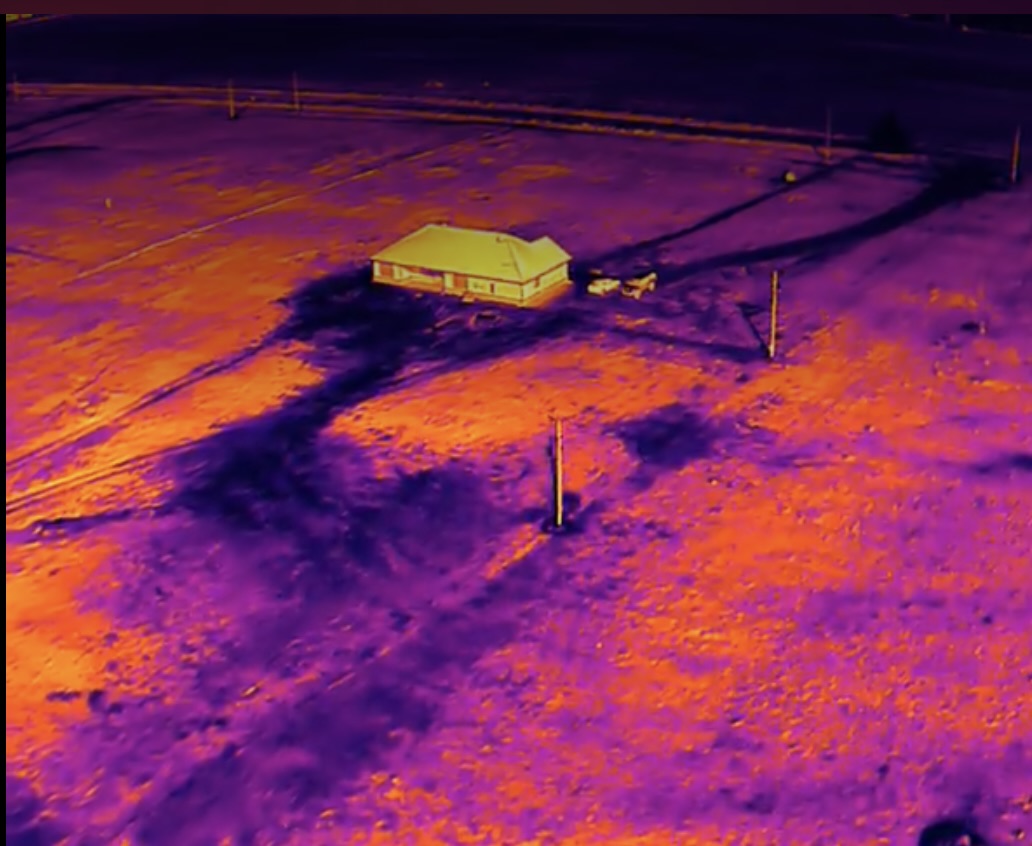
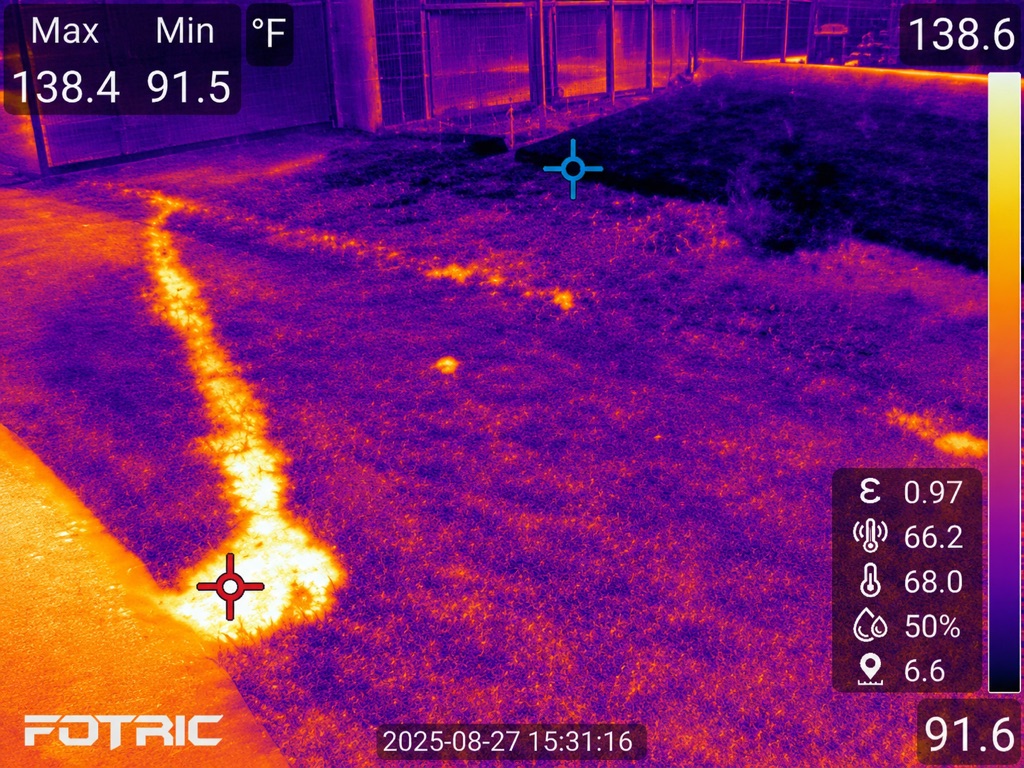
Can thermal imaging show moisture moving toward a building?
It may reveal spatial patterns consistent with moisture migration or differential drying. Those patterns should be compared with topography, drainage and independent moisture observations.
What is the difference between observation and proof?
A thermal pattern can support a hypothesis, but it does not automatically establish cause. Probes, meters, sampling, excavation, repeat imaging or other evidence may be needed.
Can the solution be outside the building?
Absolutely. If terrain or drainage is directing water toward a structure, mitigation may involve interception, grading, diversion or drainage work rather than simply repairing the visible interior symptom.
THE FIELD REFERENCE
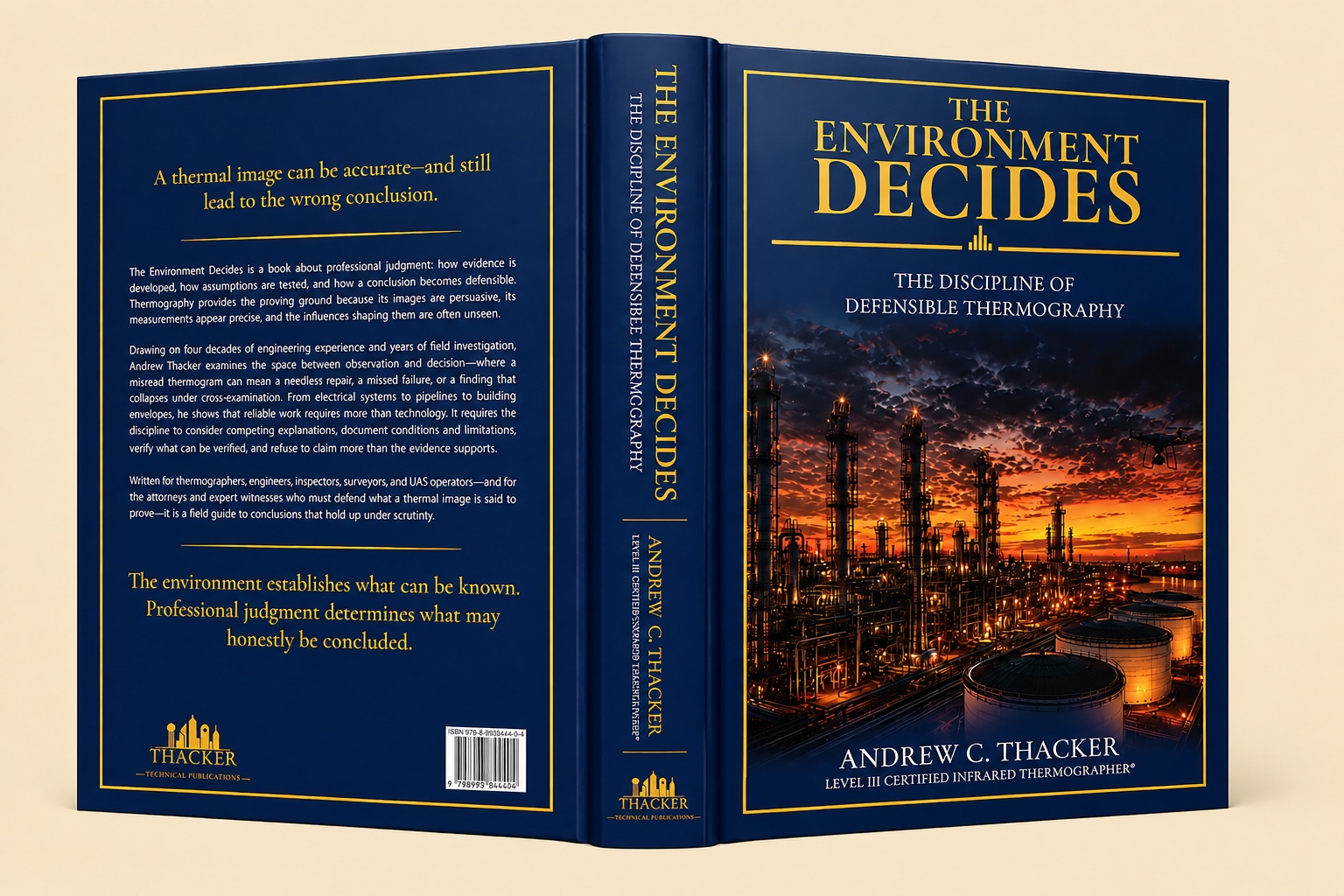
TAKE THE NEXT QUESTION FURTHER
The Environment
Decides.
The Discipline of Defensible Thermography
Look beyond the image to the physical conditions that shape it.
Environmental history. Measurement physics. Competing explanations. The book explores the discipline behind acquiring, interpreting and defending thermal evidence.
- Before the missionPlan the question and the conditions.
- In the fieldReconsider when the scene changes.
- At the deskExamine what your evidence supports.