FROM OBSERVATION TO UNDERSTANDING
A better image starts
with a better question.
Can prop wash change a thermal image?
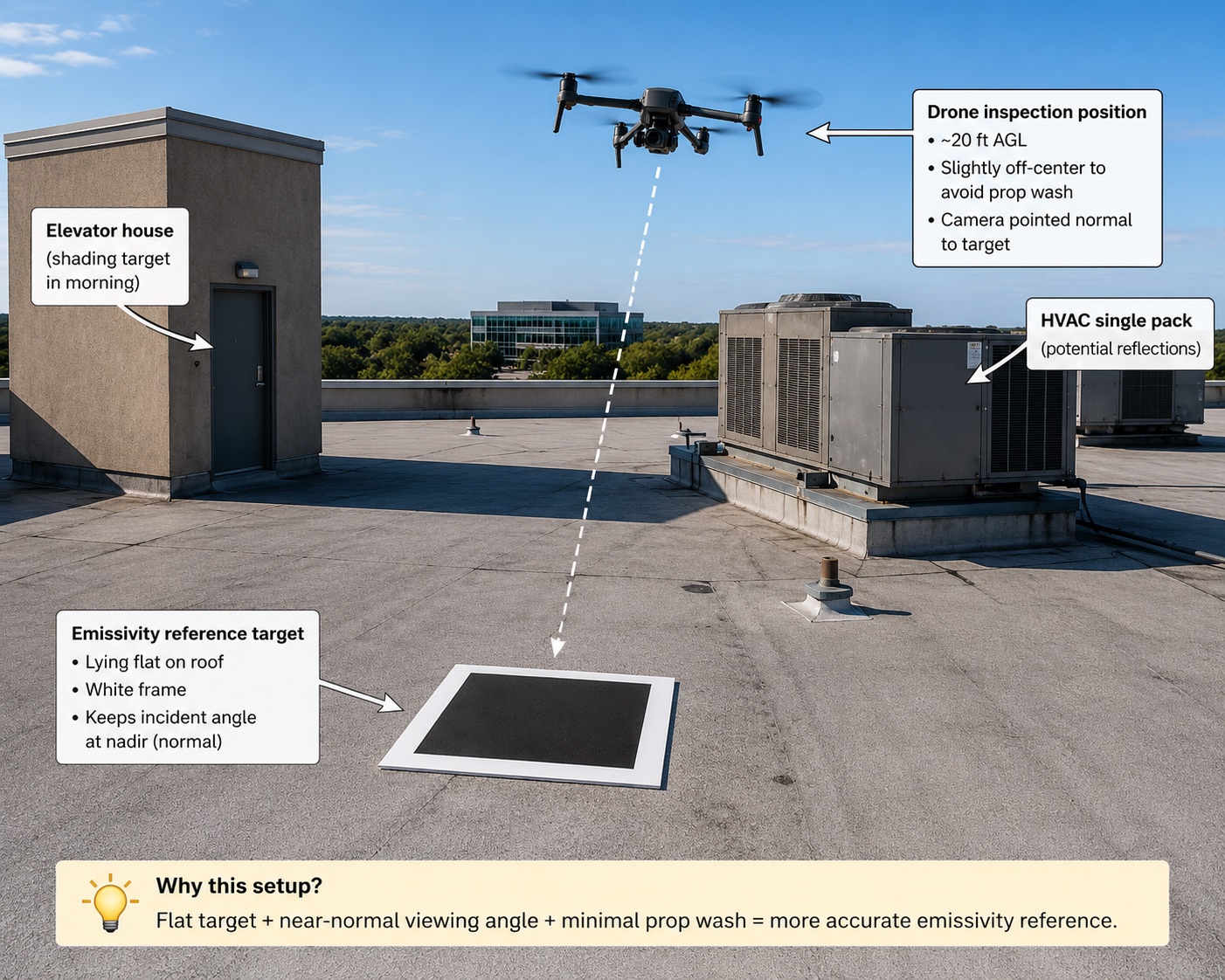
It can. Rotor wash disturbs the air adjacent to a surface and can change convective heat transfer. Whether that matters depends on aircraft size, altitude, ambient wind, surface geometry and the thermal condition being investigated.
How low is too low?
There is no single universal altitude. The useful question is whether aircraft-induced airflow can alter the surface condition or thermal contrast you are attempting to measure.
Can hovering make the problem worse?
Potentially. A prolonged hover over one area can expose that surface to aircraft-induced airflow longer than a smooth pass. The effect should be considered when repeatability or small temperature differences matter.
Does flight direction matter?
It can when ambient wind, rotor wash, viewing geometry or reflections change with direction. Consistent acquisition geometry helps separate target behavior from acquisition effects.
What else changes when I change altitude?
IFOV, ground sampling, atmospheric path, viewing angle and the amount of target represented by each detector element can all change along with prop-wash influence.
THE FIELD REFERENCE

TAKE THE NEXT QUESTION FURTHER
The Environment
Decides.
The Discipline of Defensible Thermography
Plan for the effects of the aircraft as well as the capabilities of its camera.
Environmental history. Measurement physics. Competing explanations. The book explores the discipline behind acquiring, interpreting and defending thermal evidence.
- Before the missionPlan the question and the conditions.
- In the fieldReconsider when the scene changes.
- At the deskExamine what your evidence supports.