FROM OBSERVATION TO UNDERSTANDING
A better image starts
with a better question.
What question am I trying to answer?
Define the inspection question before selecting altitude, flight path or camera settings. The required evidence for roof moisture is different from the evidence for a tank, pipeline, façade or agricultural field.
What environmental conditions matter?
Wind, solar history, cloud cover, precipitation, humidity, ambient temperature and the target’s operating or thermal history can all affect the observation window.
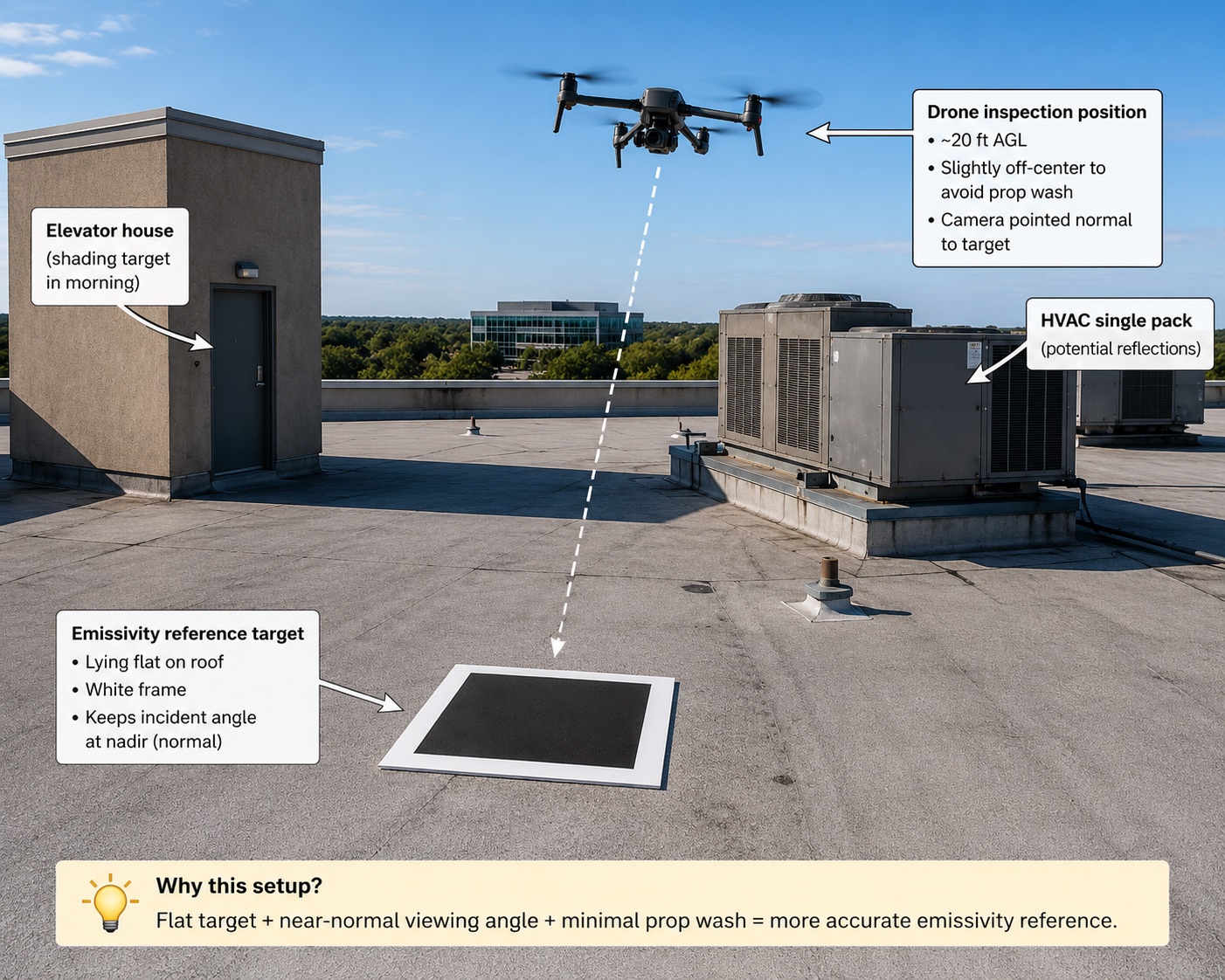
What geometry should I use?
Nadir and oblique views answer different questions. Altitude, IFOV, overlap, viewing angle, distance and target orientation should be chosen around the required evidence.
Do I need visible photographs too?
Often yes. Visible imagery provides context that a thermogram alone may not preserve — construction details, shadows, repairs, drainage, vegetation, obstructions and target identification.
What should I document for repeatability?
Aircraft and sensor, calibration status, date and time, environmental conditions, flight altitude, geometry, settings, radiometric files, reference imagery and deviations from the planned mission.
THE FIELD REFERENCE
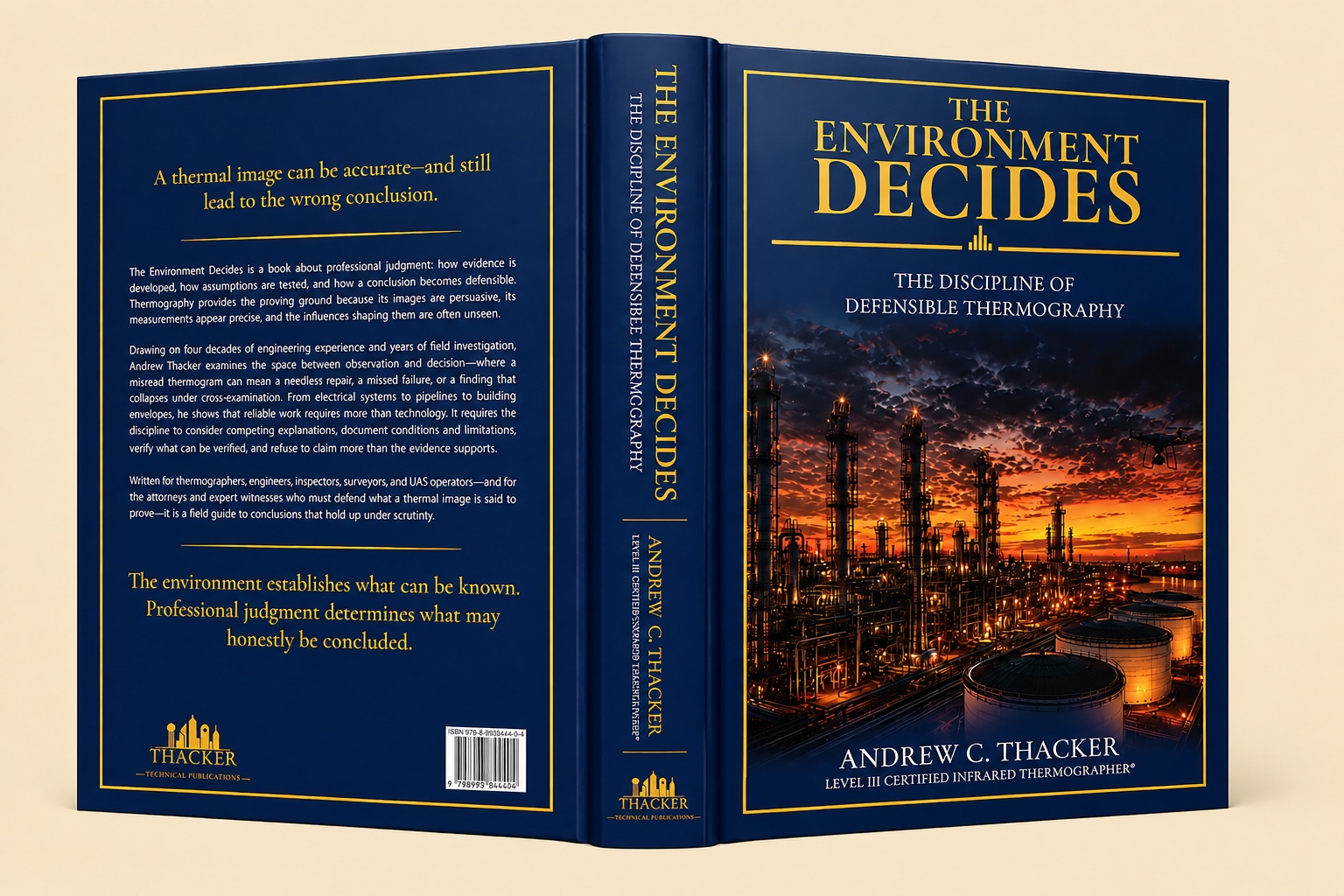
TAKE THE NEXT QUESTION FURTHER
The Environment
Decides.
The Discipline of Defensible Thermography
Bring a more deliberate planning discipline to your next thermal mission.
Environmental history. Measurement physics. Competing explanations. The book explores the discipline behind acquiring, interpreting and defending thermal evidence.
- Before the missionPlan the question and the conditions.
- In the fieldReconsider when the scene changes.
- At the deskExamine what your evidence supports.