Before You Sign the Triple Net
What you don’t know is exactly what you don’t know
The building was beautiful.
Two stories, good street, a ground-floor medical suite just under eight thousand square feet, finished out for urgent care with upgraded electrical for X-ray and CT. The offering brochure said all of that, and the brochure was accurate. The floors gleamed. The reception area looked like it had been vacuumed that morning, and it probably had. A physician was ready to sign a triple net lease and open his doors.
Have you ever walked through a space like that and felt the decision get made before you finished the tour?
Here is what a triple net lease means in plain language, for anyone who has not signed one yet. The rent is the smallest part of the deal. You also take on the taxes, the insurance, and the maintenance, and in most versions of the document that includes the roof, the rooftop equipment, and the systems inside the walls, from the day you take possession. Whatever condition those things are in when you sign is the condition you own. The landlord’s obligation to fix what was already broken depends on what the lease says, and on what you can prove.
So the question is not whether the building looks good. The question is what you would have to know before you could sign that lease with your eyes open.
The physician asked for a property condition assessment under ASTM E2018 before he signed. That is the industry standard for looking at a commercial building the way a buyer or a lender does, and it is the same document a tenant should have in hand before taking on a building’s systems as his own. It is also, in my experience, the step most tenants skip, because the space is clean and the broker is friendly and the clock is running.
We were granted access after hours, with a property representative controlling where we could go. The roof was not on the list.
That is worth sitting with for a moment. A tenant is about to become responsible for the roof and the equipment on it, and the first thing the walkthrough does is keep him off it. There may have been a perfectly ordinary reason. There usually is. But an assessment that cannot see the roof of a building whose HVAC lives on the roof is an assessment with a hole in the middle of it, and I said so in writing.
Inside, the suite told a story if you were willing to read it slowly. The ceiling tiles in the lab next to the X-ray room carried the tea-colored rings of water that had come and gone more than once. A few tiles were missing, and the plenum above them showed insulated ductwork and not much else. There was a patch of discoloration in the open casework under the nurses’ station, near a sink. The three interior transformers and eight panelboards imaged clean under infrared, no asymmetric heating, no surprises, which is its own kind of finding. And the building had been substantially unoccupied for about two years, which the brochure did not mention and the cleanliness did not reveal.
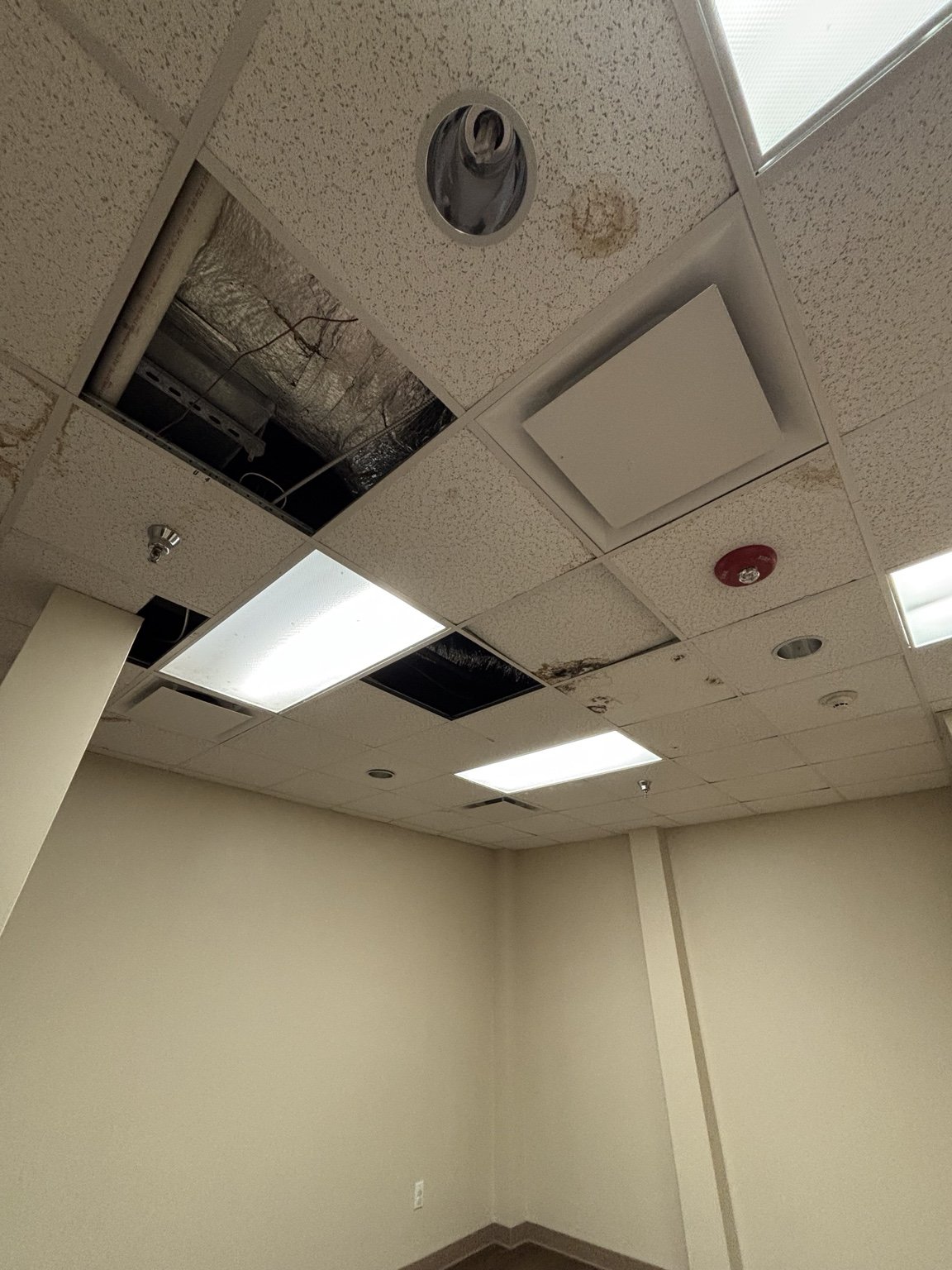
There was one more thing, and it was the one that made up my mind. On the night of the walkthrough the suite was a comfortable 74 degrees. When I came back a few days later, every thermostat in the space had been set up to 84. Think about what that means in a Dallas August. A closed building, known moisture already in the ceiling, and the one system that had been holding the humidity down turned most of the way off. Whether that was a cost decision or an oversight I could not say, and it did not matter. Warm, damp, dark, and undisturbed is the recipe, and someone had just written it on the wall.
I want to be precise about my role here. I hold the credentials to assess a building’s condition and to interpret an infrared image. I do not hold a license to assess indoor air quality, and I did not pretend to. A stained ceiling tile is not a diagnosis. Discoloration under a counter is not mold until a laboratory says it is. What I could offer was observation, and the observations pointed one direction, so the report recommended two things before anyone signed anything: get on the roof, and bring in an independent, licensed indoor-environmental consultant to sample the air and the surfaces. Knowing where your expertise ends is part of the discipline. It is also what keeps a report defensible.
We got on the roof in daylight a few days later.
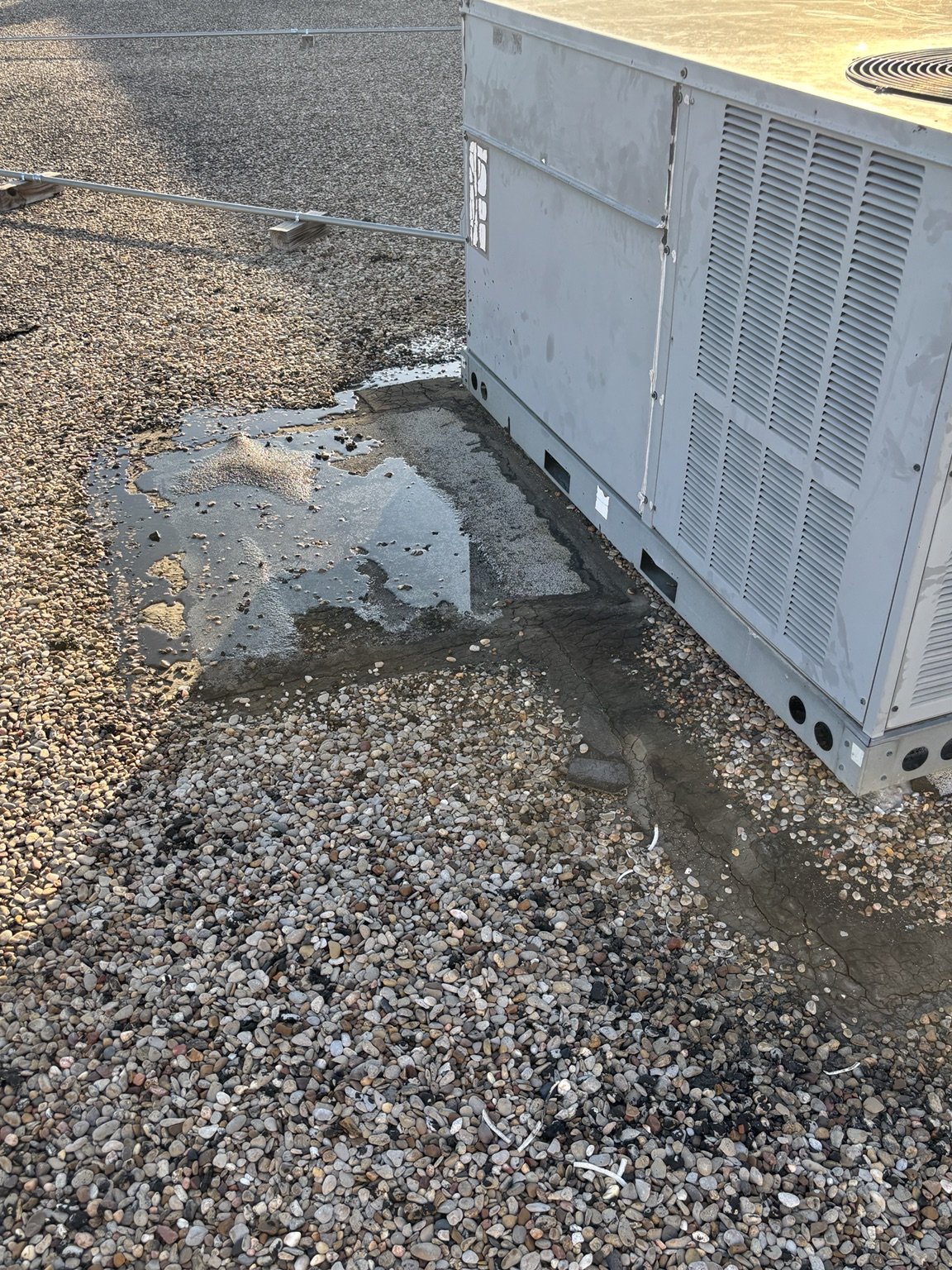
The rooftop held commercial packaged units and a bank of variable-refrigerant outdoor units, most of them from 2014, sitting on an aggregate-surfaced roof that was itself no longer young. Several of the condensate lines had been cut. Not failed, not disconnected by weather. Cut, and left to discharge directly onto the roof, where the water had been collecting in ponded areas beside the equipment for as long as the units had been running. Nobody had reconnected them because nobody had been up there. The refrigerant line insulation was split and missing in places. The outdoor coils showed widespread fin damage.
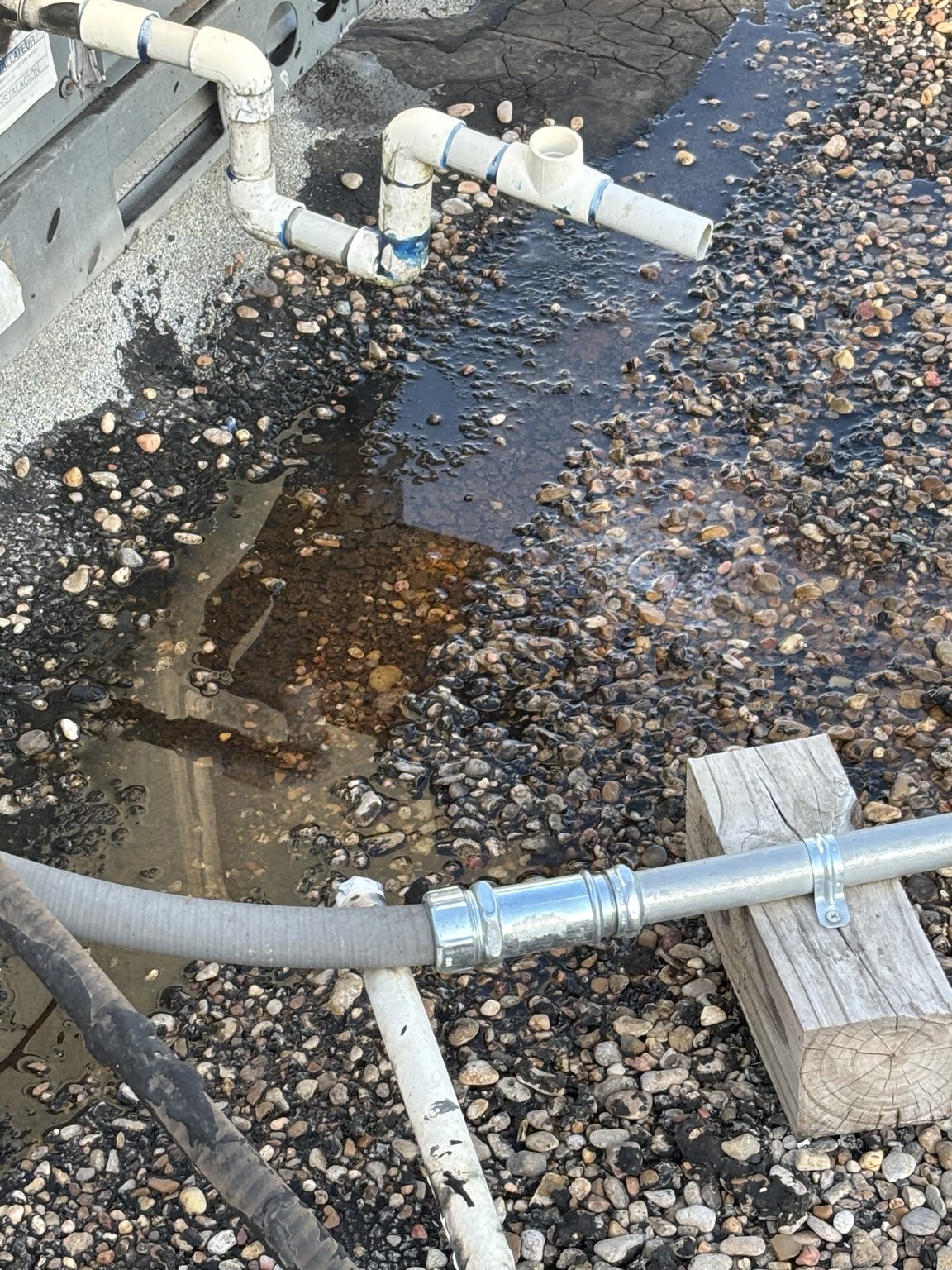
Now trace the water. Condensate ponding on an old roof beside the curbs, above a ceiling that already showed repeated wetting in the room next to the X-ray equipment. The building had been writing this story for years while the floors got polished.
The environmental report came back a week later. Visible mold growth in the CT room ceiling, in a gypsum wall in the lab office, and under the nurses’ station. Water damage under the vinyl plank in both hallways and the CT room. The air sample in the CT room carried atypical quantities of Penicillium and Aspergillus, and Stachybotrys, which is the one people have heard of. Under the Texas Mold Assessment and Remediation Rules that is not a repair. It is a licensed remediation with full containment and negative air, a separate licensed assessor for clearance, and test cuts behind the walls and under the floors to find what else is there. Nobody practices medicine in that space until a clearance letter says they can.
Which brings us back to the lease.
Every one of those conditions existed before the tenant took possession. Every one of them originated in the period when the landlord had care of the building. And every one of them would have become the tenant’s problem, financially and legally, the moment he signed a triple net lease without a dated, photographed, independent record of what he was inheriting. The assessment did not make the building’s problems go away. What it did was establish, before signature, who owned them.
I want to be careful here, because I am not a lawyer and the assessment did not pretend to be one. The report did not allocate cost between landlord and tenant, because the executed lease and its responsibility exhibits were never provided for review, and presenting dollar figures without first knowing who pays them is how a consultant misleads a client while looking helpful. What the report did was describe the physical condition of the building, with photographs and infrared images and laboratory data, in a form that would hold up when the landlord’s attorney and the tenant’s attorney sat down to talk about it. That conversation went very differently than it would have gone with a handshake and a clean floor.
So here is what I would ask anyone about to sign a triple net lease on a building that looks perfect.
Who has been on the roof in the last two years, and can you see the photographs? How long was the space vacant, and what was the HVAC doing during that time? When you asked for access to the equipment you are about to become responsible for, what was the answer?
And if the answer to any of those was silence, what do you suppose is up there?
I did not tell the physician what to do. I never do. I put the report, the photographs, and the laboratory results in front of him and let him decide, because it is his lease and his patients.
He walked away. Not because the building could not be fixed, but because of how many things needed fixing and who had let them get that way. He is an experienced emergency physician with other clinics already open, and his plan is six to ten of these centers across Texas. A landlord who had left cut condensate lines on a roof for two years and then turned the thermostats up in August was not a landlord he wanted to spend the next six months waiting on. He told the agent to call him when it was fixed and went to look at the next building.
That is the outcome of a property condition assessment more often than people expect. Not a repair list and a negotiated credit, but a decision, made with the facts in hand, to spend the time somewhere else.
What you don’t know is exactly what you don’t know. A PCA is how you find out before it is yours.